Search in the Blog

Showing posts with label Bolivar. Show all posts

Tuesday, April 23, 2024

Flamengo's Strategy to Face Bolívar

 The Brazilian team reported that due to the technical committee's planning, several starting players will not travel to La Paz. Two of them will be absent due to medical issues.


Flamengo is avoiding the altitude of La Paz. They had to endure it in Bogotá and ended up suffering. The Brazilian team brought several oxygen tanks to assist their players. Now, for the third match of the Copa Libertadores against Bolívar, the club revealed its planning prior to the trip.

According to Flamengo's social media posts, 7 players who are usually starters will not be present in La Paz. Two of them due to medical issues and the other 5 due to a planning "always guided by science in the pursuit of maximum performance."

"Flamengo reports that athletes Allan, who shows sickle cell traits that could impair performance at altitude, and Léo Pereira, with a viral illness, will not travel to Bolivia. Athletes Varela, Ayrton Lucas, Erick, Arrascaeta, and Pedro will also not be on the list according to the technical committee's planning, always guided by science in the pursuit of maximum performance," the club highlighted on its X account.


Planning that would harm Millonarios

Bolívar celebrates that Flamengo won't go with their starters. Flavio Robatto did it when he found out that Millonarios wouldn't have Mackalister Silva, now he would do it with the important starters of the Brazilian club. The Bolivian team is leading Group E with 6 points after the victory against Palestino in Chile and the triumph against the ambassadors in Bolivia.

Flamengo will have to go to take points away, Millonarios would also need the Bolivian club not to add more points. However, the first thing the blues have to do is win in Chile against Palestino, then they will face Bolívar in El Campín and there could be some difference.


Monday, March 25, 2024

Bolívar Leaks publica los sueldos y premios de los dirigentes del Club Bolivar

 El hilo en twitter esta en:


Aca rescatamos lo que dicen estos Twitts
ESCANDALO EN BOLÍVAR/BAISA
El Club está en etapa de ser AUTOSOSTENIBLE, MC no envía dinero desde Sept del año pasado debido al ingreso de CL. 
Pero hay un clan de dependientes del Club, que ha secuestrado los ingresos del SOCIO CENTENARIO para beneficio propio y familiar👇  

ESCANDALOSO ; Se reparten el ingreso de Copa 2024 del TOTAL en porcentajes a Dirigentes(punto 8 del correo). También determinan ser liquidados cuando toque con el valor del anterior contrato, el Club asume el IVA😡 
mail dirigentes de Bolivar

ESCANDALOSO ; planilla de descuento salarial de solo un 10% a Dirigentes (a jugadores se llegó a un 30%), se hace notar Gastos Extras de Gerencia General y Legal( 10 y 15 mil respectivamente).
Planilla

ESCANDALOSO, el año 2022 fue de "déficit "en el Club, pero no para los jugosos BONOS que se pagaron en cada área los directores y uno especial individual a EDUARDO VALDIVIA; FERNANDO IBARGUEN ; RODRIGO QUIROS 
Bonos Bolivar

Bonos Bolivar

Bonos Bolivar

VERGÜENZA :
Abren una cuenta llamada "ALLOWANCES"(Subsidios en español), desde esa cuenta pagan pese a los millonarios sueldos que reciben, los pasajes y gastos de sus familias más:
 VALDIVIA y Flia; DEL SOLAR y esposa ; QUIROS y la novia; CAMPERO y la hija. 
Paginas Bolivar

Monday, April 25, 2022

Bolivarism celebrates its beloved 'Liberator'.

 It could not be otherwise. The Bolivarista fans celebrated yesterday their beloved Simón Bolívar Libertador Stadium with a party and in one of its last functions, they celebrated a sentimental moment but also a moment of joy that they will never forget.

Nearly two hundred people gathered at the old stadium in the Tembladerani area at the call of the management, who decided to make the stadium the center of attention in the commemoration of the 97th anniversary of the La Paz team.

The doors of the stadium opened at 11:00 a.m. and entire families were present. All the celebration took place on the pitch. Sports dynamics such as soccer-tennis, penalty kicks and informal matches were organized there.

Around the field, foosball tables were installed and in another sector an improvised museum where the trophies won by the Academy throughout its history were exhibited. Attendees did not miss the opportunity to take the famous selfies.

There were also food outlets, the chola sandwich and the choripán, the most requested by diners. An exclusive point for tasting the club's muscatel wine and other snacks. Sale of official sports apparel and other attractions.

After midday, the musical festival began. Los Juglares del Sur opened the event with a folkloric rhythm, the show was also animated by Grupo Hit, Son Mestizo, Hermanos Romero, DJ Danilo Mix and the central act was in charge of the famous tropical singer Jorge Eduardo who made the crowd dance with songs that are part of the musical repertoire of the academics such as 'Bolivarista señores soy yo' or 'Celeste a morir'. The activity lasted all afternoon and closed around 19.00.

"Ninety-seven years are not celebrated every day, the party in Tembladerani is to celebrate this great stadium because its essence is not going away and will remain the same forever, the demolition has not yet proceeded so we will continue to carry out some other final activities," said marketing manager Mariano Alvarez.

The people vibrated with the entertainment numbers, but also expressed their sentimentality for the history captured in this old building that was Bolivar's home for more than 40 years.

"Tembla is leaving us, it is sad for all that we lived here but also fill us with happiness because they will build a better one," said Veimar Chuquimia.

"As a child I came to see the Academy here with my dad, who is no longer with me but they are unique moments that we will never forget, Tembladerani forever," emphasized Yuri de la Gasca.

The ladies are also fans and were not left out: "For me this stadium and Bolívar are everything and I am going to celebrate to the max, long live Bolívar and Tembla," said Albita Quiroz. 

It was one of the last events to be held at the stadium, which will be demolished at the end of the month or beginning of May to make way for the construction of the new sky-blue temple.

Bolivarism celebrates its beloved 'Liberator'.

Bolivarism celebrates its beloved 'Liberator'.


Tuesday, March 15, 2022

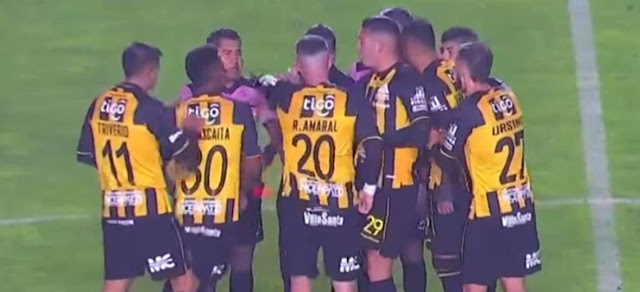
Rodrigo Amaral of The Strongest may be suspended from six months to one calendar year.

 The report of the referee Juan Nelio García, who officiated the clásico paceño, states that he sent him off for assaulting the second assistant linesman.

Rodrigo Amaral, who has become The Strongest's most important reinforcement so far this season, being a key player in both the Apertura Professional Division tournament and Copa Libertadores matches, is at risk of suffering a harsh sanction.

The Uruguayan midfielder was sent off in the clásico paceño, according to the report of the referee Juan Nelio García, who reported that the player assaulted the second line assistant (Edwin Paredes).

The aggression allegedly took place after Bolívar's 1-0 win over The Strongest on Monday night at the Hernando Siles stadium in La Paz.

According to the Disciplinary Code of the Bolivian Football Federation (FBF), article 73, on aggressions to match officials, states: "The player who was expelled from the field of play for actually and by any means assaulting the match officials will be sanctioned with a suspension of six (6) months to one (1) calendar year provided that the act did not cause physical harm or impediment to the affected player.

Said article adds that "if the aggression causes serious physical harm and impediment to the victim, the sanction shall be increased to two (2) calendar years. If the aggression causes very serious physical harm and impediment to the victim or consists of repeated blows with fists, kicks, headbutts or the use of any instrument, the sanction will be definitive.

In the images of the Tigo Sports broadcast, it can be seen that Amaral first gave a push from behind to the fourth official and then another push from the front, after which he approached and confronted the assistant referee.

At the moment of leaving the melee, the Uruguayan also makes gestures as if to imply that he ran money in the classic.

Article 73 also clarifies other points regarding aggressions against soccer match officials: "These sanctions shall also apply to aggressions made outside the field of play, at halftime or at the conclusion of a soccer match, without the aggressor's expulsion being necessary for this purpose. Attempted or unsuccessful aggression shall be punished with a one to three month suspension".

Rodrigo Amaral of The Strongest

Pato Rodríguez to Vaca: At his age I already knew how much the Sudamericana and the Recopa weighed

 The academic assured that he did not "canchereó" to the Aurinegros and that the 10 of The Strongest made those comments because he lost.

The day after the Bolivian superclásico, the repercussions do not stop. This Tuesday, Patricio Rodríguez responded to the comments of the Gualdinegro 10 Henry Vaca, who after his team's loss to Bolívar told the academic that "you have to cancherear in the Copa".

"At his age, I already knew how much the Copa Sudamericana and the Recopa weighed, both of them. I still don't think he played neither, or I don't know because I have no idea. That's what you have to respect," said Pato, in contact with Futbolmania.

On Monday night, Rodriguez assisted Roberto Carlos Fernandez to score the only goal of the match. He took the reins of his team and was the most influential player of the match.

The dribbles and dribbles of the former Independiente de Avellaneda player were a source of anger for the Atigrados, especially Vaca, who went to look for the Argentine after the final whistle.

On his way out of the Siles, the former Oriente Petrolero player said that Pato should "cancherear" in the Copa Libertadores, a competition from which Bolívar was eliminated in the second round.

"I think he should play in the Copa Libertadores. Pato Rodriguez did not touch the ball in the Libertadores and now he comes to throw rabonas, we should not be shitty as he was today," said Vaca.

In response, Rodríguez assured that the atigrado player made those comments because he lost.

"I understand that journalism takes advantage to grab a guy who is angry because he lost, with not many resources to declare and ends up saying what he said," said the also former teammate of Neymar, in Santos of Brazil.

Pato assured that the rabonas are part of the resources he uses on the field and that they can go well, as on the night of the superclassic, or badly as it happened against Universitario de Vinto, but that does not mean that he has "canchereado" the rival. 

"Cancherear in soccer is when you are winning 4-0, you take it to the corner and you start to boludear and I never did that at any time (...). Respect in soccer, you have to respect, at his age I knew how much the Sudamericana and the Recopa weighed in my hands, you have to respect that", said the midfielder of the Academy.

Pato Rodríguez to Vaca

La Paz Clasico: The Strongest 0 - 1 Bolivar

 The atigrados pressed in the end. They were denied a penalty and came close to equalizing. 

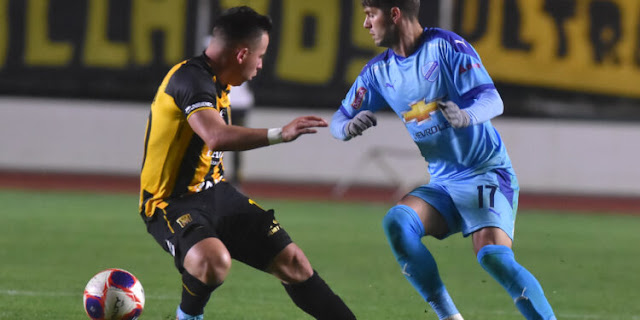
Bolivia's superclassic went to Bolivar. La Academia defeated The Strongest 1-0 last night at the Hernando Siles stadium. They returned to the top of the standings in the B series and ended a three-game drought without beating their traditional rival.

It was an intense, tough match, with a permissive referee who allowed too many hits, in addition to a dubious play at the end that could have changed the history of the game.

El Tigre did not hold anything back, they gave their soccer especially in the second half, which helped the show.

The first half belonged to Bolívar. The light blue team had control of the ball, took the initiative and had the clearest options to make the difference.
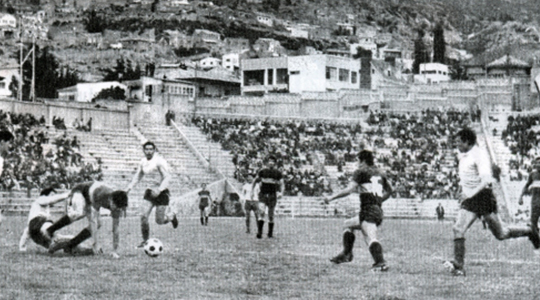
Patricio Rodriguez was the driver of the Academy, caused more than one headache with his skill and even got the atigrados off their feet.

The Aurinegros had a glimpse of the rival goal after five minutes, but it was not because of an elaborate play, but because of a complication by Yomar Rocha who played back to Rubén Cordano. The goalkeeper hesitated and put his goal at risk.

Two minutes later, Leonel Justiniano filtered a pass to Bruno Savio, the Brazilian played to Francisco da Costa who shot and smashed the ball against Jhohan Gutiérrez's post.

The Celestes opted for a showy game, tried to come out with the ball under control and the crosses made the home team's last line a lot of work.

At 16', the Tigre arrived with a free kick. Fernando Saucedo took the cross and Prost came close to scoring when Cordano failed to get out of the way.

At 33', Gabriel Villamil came out playing with Savio, crossed for Da Costa, but the Brazilian collided with the goalkeeper.

Five minutes later came the first goal. In a free kick, Rodriguez played with Fernandez who took a shot that beat the goalkeeper of the Decano (1-0).

The Achumani team tried to wake up and take advantage of Cordano's doubts, but without results.

The Celeste's supremacy continued on the field, and the second could have come at 46' in another play, but Rodriguez's shot crashed into the left-hand wall.

In the second half, the Atigrados came out more determined, with Henry Vaca in the 53rd and 55th minutes, but the equalizer was not forthcoming.

The Academy regained control of the game in minute 57 when Rodríguez tried a shot from half distance. A minute later, Justiniano tried to score but the post said no to his effort. At 62' it was Savio's turn and at 64' Fernández came close to the second goal.

At 77', Tigre loosened their grip and came close to equalizing. Jaime Arrascaita made a pass to Trivero, but Cordano saved it.

At 80', Vaca made a great individual play and five minutes later, after another shot by the midfielder, Triverio was stopped by Martins; it was a penalty, but the referee did not take it.

In the end, the Academia ended up defending and could have equalized, but the "atigrados" were unable to score. 

Roberto Fernandez Clasico

Monday, March 14, 2022

The Strongest - Bolívar, with opposite realities

 The atigrados are giving priority to the Copa Libertadores and will field an alternate team for the 289th superclásico.

The Strongest and Bolívar will face each other tonight (19:00) in Bolivia's 289th superclassic with different realities. El Tigre can even afford the luxury of losing on this day and their fans will be patient, as the acid test will be on Thursday for the Copa Libertadores. On the other hand, for the Academia it is win or win because they have had more rest, will play with their full starting line-up and will try to win a derby after more than two years.

It is no secret that the atigrados are focused on the rematch with Universidad Católica of Ecuador on Thursday and on the million-dollar income (4,100,000 dollars) that they will get if they reach the group stage, an amount that could save the budget that their management has planned for the rest of the year.

The sky-blue team has the heavy burden of getting a victory on its shoulders, since its supporters were not satisfied with the elimination of the team in phase 2 of the Copa Libertadores and its return to the local competition was not as desired because it comes from a draw with Real Tomayapo to one goal per side, in Tarija.

Both teams are second in their respective groups. The Aurinegros accumulate 11 points in series A and the Bolivaristas 10 in group B. Whichever team wins will have regained first place and will be in a strong position to qualify for the final phase of the Apertura.

Who is the favorite?

When it comes to this kind of match, all previous encounters are left aside, since the famous phrase "in the classic there are no favorites" takes on its value and there are plenty of examples in the extensive history of the traditional clash, although it can be mentioned that on this occasion the candidate to win is Bolivar.

The sky-blue team did not move during the whole week in La Paz and they are focused only on the local competition. Coach Antonio Carlos Zago has his entire first-team squad at his disposal, while the atigrados will field an alternate team as their priority is the international tournament.

The teams

As Martín Prost and Cristian Esparza were expelled and have pending suspension in the Copa, both will lead the attack of the Tigre de Achumani. Then the changes that DT Cristian Díaz will make will be in all sectors, even in the goal where Johan Gutiérrez may appear in place of Guillermo Viscarra who is not in the fullness of his conditions due to a muscular contracture.

In Bolívar, the only doubt is that of Diego Bejarano, who is suffering from fatigue in one of his legs. If the player from Santa Cruz does not recover, his place could be taken by youth player Yomar Rocha, who would occupy the U-20 place.

The practice sessions of the classic rivals were different. The Strongest did it yesterday morning at its complex in the Achumani area and at the end the players talked to the press. Bolivar went to Villa el Sol, "behind closed doors", and without contact with the media. 

The Strongest - Bolívar

Sunday, February 20, 2022

Club Bolivar - International Achievements

Bolívar currently ranks ninth in the Copa Libertadores historical ranking, behind only Nacional, River Plate, Peñarol, Boca Juniors, Olimpia, Cerro Porteño, América de Cali and Colo-Colo.

Bolívar is the first Bolivian team to make an international tour. In December 1930 and January 1931, Club Bolívar played five matches in Chile, becoming the first Bolivian team to play outside Bolivia.

Bolívar is the best placed Bolivian team in the historical table of the Copa Libertadores de América, appearing in ninth position.

Bolívar is the only Bolivian club to reach an international final.

Bolívar is the only Bolivian team to be semifinalists in the Copa Libertadores de América in its current format (knockout rounds from the round of 16).

It is also the Bolivian team with the most participations in international tournaments, with 28 Libertadores Cups, 6 South American Cups and one Conmebol Cup.

Bolivar had a good international representation as it is currently ranked 8th (out of 196 clubs) in the Copa Libertadores ranking since its creation in 1960 until the end of the Copa Libertadores 2013 edition.

Bolivar is the 5th team in the Americas with the most participations in the round of 16 of the Copa Libertadores with a total of 11 participations.

It also ranks 17th (out of 25) in the 12 editions from 2002 to 2013 of the Copa Sudamericana.

In the 1991 Copa Libertadores, Bolívar defeated Argentinean teams Boca Juniors and River Plate at home, with Paraguayan Miguel Ángel Sanabria, who played for the Bolivian club that year, as a star player.

Bolívar is currently ranked 21st in CONMEBOL's Official Club Ranking, followed by big clubs in the Americas such as Colo-Colo, Racing Club, Club Atlético River Plate, Club Atlético San Lorenzo de Almagro and Botafogo de Futebol e Regatas.
International Achievements


America's Libertadores Cup
1986


América de Cali and Olimpia of Paraguay played against them in the semifinal. In La Paz they clearly defeated América by 2 to 0. The match that broke the Celestial options was played in Cali. Bolívar started winning with a great goal by the great left striker of the Peruvian national team, Jorge "Coqui" Hirano, right at the beginning of the second half. The sky-blue team, with gritted teeth, held on to the victory until the 30th minute, when the locals managed to equalize. In the 39th minute, Ricardo Gareca scored the winner for América. The last match in La Paz still gave the Academy a chance, but Olimpia opened the account and Abdeneve tied it at 27 minutes of the second half. Time was not enough. América achieved 5 points, Olimpia 4 and Bolívar 3. In the total table of that tournament, with its 12 points, Bolívar was behind River and América managed to occupy the third place.

South American Cup
2004


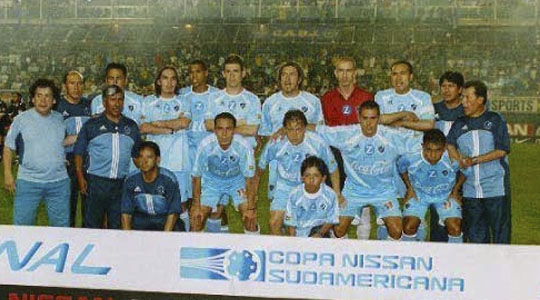
In the final, they played against Boca Juniors from Argentina. The Bolivian club played the first leg at the Hernando Siles Stadium, defeating the Argentinean club by the minimum difference, thanks to Horacio Chiorazzo's goal in the 75th minute. In the second leg, played in Buenos Aires at La Bombonera, the Bolivian team led by Bolivian international Vladimir Soria, lost 2-0 due to goals by Martín Palermo and Carlos Tévez, in the 14th and 28th minutes respectively, and thus the Bolivian club, was runner-up in the continental competition.

Bolivar ended 2004 in 32nd place in the world club ranking, ahead of several traditional clubs, such as Bayern Munich (39th), Cruzeiro de Belho Horizonte (44th), América de México (52nd) and Cerro Porteño (68th), among other clubs.
Copa Sudamericana 2004


America's Libertadores Cup
2014


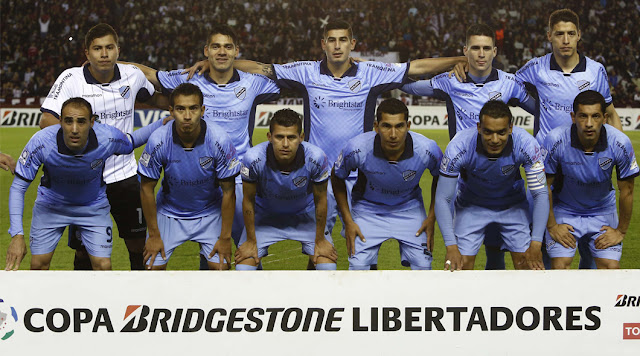
Bolivar reached the semifinals of the Copa Libertadores for the second time in its history, this time in the 2014 edition. During this instance, the Academy defeated León, Emelec and Flamengo in the group stage. They then defeated León again in the round of 16, while in the quarterfinals they beat Lanús from Argentina (after a 1-1 draw in Buenos Aires and a 1-0 win in La Paz). However, in the semifinals they lost to San Lorenzo de Almagro (with a 5-0 defeat in Buenos Aires and a 1-0 win in La Paz) and were eliminated from the competition.

Saturday, February 19, 2022

Club Bolivar - International participation

 1960 a 2014

In 1967 Bolívar participated for the first time in the Copa Libertadores de América. It was the beginning of a brilliant history of the light blue academics and the most complete participation of a Bolivian team.

It participated 26 times in the Copa Libertadores de América, followed by The Strongest. Its best participations were in 1986, 1994, 1997, 1998, 2000 and 2014, reaching the semifinals and/or the third phase of the competition. It is the eighth team with the highest number of points in the history of the competition out of almost 200 teams that have participated in it since 1960.

Club Bolivar - International participation


1960 a 2014


In 1967 Bolívar participated for the first time in the Copa Libertadores de América. It was the beginning of a brilliant history of the light blue academics and the most complete participation of a Bolivian team.

It participated 26 times in the Copa Libertadores de América, followed by The Strongest. Its best participations were in 1986, 1994, 1997, 1998, 2000 and 2014, reaching the semifinals and/or the third phase of the competition. It is the eighth team with the highest number of points in the history of the competition out of almost 200 teams that have participated in it since 1960.


club bolivar


Thursday, February 17, 2022

Bolivar Club History 1978 - 2017

1978 a 1997

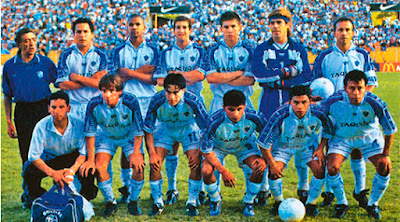
The 1978 champion team, the first Bolívar champion of this new era: Carlos Conrado Jiménez, José Queiroz, Carlos del Puerto and Vlado Svigir; Ricardo Troncone, Aldo Fierro, Ramiro Vargas, Jimmy Lima, Héctor Cáceres, Pablo Baldivieso, Luis Gregorio Gallo; Erland Araoz, Stephan Matic, Carlos Aragonés; Viviano Lugo, Raúl Alberto Morales, Waldino Palacios, Jesús Reynaldo, Porfirio "Tamayá" Jiménez" and Carlos Borja (then right forward). In 1979 they won a minor official competition, called Copa Liga.

During the 1980s, it won its first bicampeonato in the 1982 and 1983 tournaments, won the 1985 tournament and also its second bicampeonato, winning the 1987 and 1988 tournaments. In the 1990s, he was again crowned two-time champion in 1991-1992, in 1994, two-time champion again in 1996-1997 and runner-up in 1990 and 1993. It also won the 1997 Apertura and 1997 Clausura short tournaments. 

Bolivar Campeon

The 21st Century
2001 - 2006

In the new millennium, Bolívar won its first title, winning the 2001 Apertura Tournament. The following year, Bolivar improved its campaign and won the First Division championship by winning both short tournaments (Apertura and Clausura). The season also meant the consecration of Joaquín Botero, who managed to finish the year with 49 goals, which earned him the International Federation of Football History and Statistics (IFFHS) award as the world's best scorer in the First Division in 2002.

As of 2003, the annual final was no longer played and the winners of both the Apertura and Clausura tournaments were considered First Division National Champions. As a result, the club won the 2004 Apertura, 2005 Adequación and 2006 Clausura tournaments.
Bolivar 2000


The 21st Century
2008 - 2017


In 2008, a new cycle began at the club, with the BAISA project and the Marcelo Claure, Guido Loayza tandem. The first achievement of this new light blue phase came in the 2009 Apertura Championship.

In 2011 it was crowned champion of the Adecuación de la Liga tournament.

In 2013 the Bolivar club managed to win the Clausura tournament.

In the second half of 2014 Bolivar managed to win the Apertura Tournament, in the following tournament it won again the Clausura Tournament 2015.

The sky-blue team repeated for the sixth time a bicampeonato, winning the Clausura and Apertura Tournament 2017, thus achieving its twenty-second First Division title.

Proyecto BaISA


Wednesday, February 16, 2022

Bolivar Club History 1957 - 1978

1960 a 1976

On October 1, 1960, the Major Tournament was created. Given the successful experience of the previous decade with well-organized championships and national transcendence. The president of the commission in charge of this tournament was the president of the AFLP.

Subsequently, the tournament was renamed "Simón Bolívar Cup", with a regionalized character due to the difficulty to travel at that time, thus playing the final phase in the last 4 months of the year among the winners of their associations and regional tournaments.

From 1960 until 1976 in the national tournament, it won the 1966 and 1968 championships. Lauro Ocampo Crespo was then president of the institution. In 1968 Bolivar won its first title under the presidency of Mario Mercado. In 1976 it won its last title before the liguero era.

Bolívar won the 1966, 1967, 1969 and 1976 titles and the 1960, 1968 and 1974 runner-up finishes in the championship of La Paz.

In 1967 they played their first Copa Libertadores with Club Deportivo 31 de Octubre.

The Cursed Year 1964 - 1965

The black year in the Celeste's history is considered to be 1964.

A bad campaign led to relegation in that championship against a recently promoted team, Universitario de La Paz, which beat Club Bolivar 2-1.

In 1965, a new board of directors was formed, headed by Luis Eduardo Siles Salinas, with the support of Mario Mercado Vaca Guzmán, which led to the birth of the so-called "Operation Return".

Bolívar won the undefeated championship of the second division of La Paz with a team that had much more hierarchy than its rivals. Soon after Bolívar was relegated, it was thought that relegation was the beginning of the institution's debacle, as it was for others.

The Seventies 1974 - 1983


In 1975 Bolivar had one of the highest quality squads in national soccer, having discovered Carlos Aragonés, an exceptional Bolivian midfielder.

The team also had Ovidio Mezza, at that time the best national player, with the talent of the greats, a mixture of creative midfielder and attacker.

There was the goalkeeper of the national team Carlos Conrado Jiménez, Luis Gregorio Gallo, who had worn the Argentinean national team jersey, the young Edgar Góngora, a defender like Pablo Baldivieso and the great gentleman of the area Ricardo Troncone.

The Academy also won the runner-up trophies in La Paz in 1974 and 1975.

Bolívar was in the Copa Libertadores in 1970, 1976, 1977 and 1979. However, they were unable to advance beyond the first round. After their 3-2 defeat in 1970 against Boca Juniors, they began an important period in which they were not defeated playing at home in La Paz until 1983.
Bolivar Campeon 1982

1977 a 1978


The structural crisis of soccer brought to light by the catastrophe of the national team in Cali led to the creation of an entity with the exclusive participation of professional clubs at the national level.

On August 23, 1977, at the then Sheraton Hotel in La Paz, 16 clubs from almost the entire country decided to create the Bolivian Professional Soccer League.

Club Bolivar won its second league championship in 1978.
Bolivar Campeon


Tuesday, February 15, 2022

Bolivar Club History 1935 - 1957

1937 to 1945

The Celestes became champions for the second time in 1937.

Bolívar was runner-up in 1938, champion for four consecutive years between 1939 and 1942, achieving the four-time championship. That team was led by the players Walter Saavedra, Rojas, Romero, Plaza, Gutiérrez and Garzón.10 He was also runner-up in 1943 and 1945.

1947

1947 is an important year for Bolívar and for Bolivian football, as Víctor Agustín Ugarte debuted in the light blue jacket, the Tupiceño who came to La Paz to test himself and from the first day showed his quality. Bolívar made him debut against Ferroviario and that same year he debuted his talent in the Bolivian national team. Ugarte is for those who saw him play, the undisputed best Bolivian player in history. Entering right in the old 2-3-5 scheme, he was progressively falling behind to manage the team

Bolivar 1947

Semi-professional era

1950

As of 1950, the AFLP divides its tournament into First “A” with the clubs already consolidated from amateurism and the amateur division. Later, teams from Cochabamba and Oruro joined the 1st A tournaments, thus giving way to interdepartmental championships.

Bolívar was the first champion of this stage. In the presidency of Armando Gamarra and under the direction of Víctor Agustín Ugarte from Tupic, Mario Mena from Tarija and the participation of players such as the Argentine Ramón Guillermo Santos, they became champions with 21 points.

Among the players who led the club to its first professional glory were, in addition to the three leaders: Conrado Kramer, Walter Vascones, Celestino Sandoval, Guillermo Baldellón, Arturo Miranda, Edgar Vargas, Fernando Sanzetenea, Benjamín Ugáz, Arlindo Puertas and Walter Orozco.

Bolivar 1950

1953 to 1956

With José Fiorilo he won the 1953 title, for the first time a team achieved the professional tournament undefeated with 11 wins and a whopping 40 goals in 14 games.

He repeated the success by winning the 1956 championship. Rodolfo Plaza Montero, who had been a great national player for both Bolívar and the national team, directed the club. He is the only former player of the institution who was also president.

His unforgettable international friendly match was played on January 14, 1956 in La Paz when he defeated Club Atlético River Plate of Buenos Aires by a historic 7-2 win. Carrizo, Rossi, Bayro, Vernazza, Sívori, Méndez, Ángel Labruna and Zárate played in the millionaire box. Bolivar gave himself a banquet. It was a game that has become a legend and the fans do not forget the historic win.

Bolivar 1956

1957

Given the fact that the South American Football Confederation (CONMEBOL) had organized the South American Championship of Champion Clubs (later called Libertadores de América) at the beginning of the year, the Bolivian Football Federation decided to create a championship under its tutelage, taking control of the interdepartmental tournaments that had been under the administration of the AFLP.

Bolivar 1957

Monday, February 14, 2022

Bolivar Club History 1925 - 1935

 Bolivar Club Foundation

On April 12, 1925, on Junín Street in the city of La Paz, a group of young people gave way to the creation of a sports club, called "Club Atlético Bolívar" in honor of the great Liberator Simón Bolívar.

Over the years, the name of Club Atlético Bolívar was reduced to just Club Bolívar, an institution that would ultimately become the most successful and important football club in Bolivia.

The first directive was formed as follows: President Armando Gamarra; Vice President Guillermo Ortiz; accompanied by: Carlos Terán, Humberto Bonifaz, Luis Ernesto Sanz, Héctor Salcedo, Rafael Navarro and Felipe Gutiérrez.

First Directive Bolivar Club

Amateur Era 1927

In 1927, two years after its founding, Club Bolívar joined the La Paz Fútbol Association. Bolívar participated in an official championship for the first time, which was played on the Miraflores field, where it was runner-up.

The first team that disputed the 1927 championship in which, being a debutant, achieved the runner-up behind Nimbles Sport, was made up of a stable team that was made up of Walter Miranda, Enrique Tellería, Felipe Gutiérrez Nieto, Víctor Leclere, Carlos Terán, Germán Garnica , Roberto Segaline, Miguel Carreón, Luis Ernesto Sanz, being their captain Humberto Barreda. Alfredo Molina, Roberto Gómez and Carlos Álvarez were incorporated a year later.

Bolivar

1927 to 1929

His first international friendly match was played on June 3, 1927 when he faced Coquimbo Unido de Chile in La Paz, he was defeated 2-1.

In 1928 the sky-blue ones occupy the fifth place in the table of placements.

In the official tournament of the year 1929, the Bolívar club gets third place.

1930 to 1931

On May 11, 1930, the official championship began, and ended on July 30 at the main stadium, Estadio Hernando Siles, with the Bolívar club achieving the sub-championship with seven units.

In 1931 the tournament was met with poor performances by teams that did not have good lower divisions, limiting the championship to only four teams. 

Bolivar 1930

1932 to 1935

It was in 1932 when the Bolívar club achieved the championship played in two series for the first time in its history. The contest began on May 26, having to be suspended due to the events of the Chaco War on September 25. "La Paz Fútbol Asociation", established that the location and score of the moment was recognized in the final table. Due to this circumstance, Club Bolívar was declared Champion of that year.

In the years 1933 and 1934, the tournaments were suspended due to the war in Chaco

After the war, the championship was restarted only in 1935.  

Bolivar

Continue in: 

Sunday, February 13, 2022

Claure arrives and the Academy wants more capacity for the Cup

 The president of Bolívar, Marcelo Claure, announced from the United States that he will arrive in the country to see the return match for the Libertadores against Deportivo Lara, on Wednesday (18:15). The leadership aspires to have greater capacity and fill the stadium.

His vice president stated that they will make arrangements for the authorities to authorize 75% capacity, today what is allowed for this type of event is 50%.

“The capacity is at 50% but we are going to try to make it 75 so that we have a full stadium next Wednesday. We want to see the Siles full after time, hopefully we get the authorization”, said Jorge del Solar.

On the arrival of Claure, the leader informed that he will have a busy schedule in La Paz but that the main objective of his visit is to share with the people, players and witness the international match.

Marcelo Claure was in November in Santa Cruz and La Paz. On that occasion he came to present the progress of the club's centennial project that includes the construction of a stadium, a High Performance Center and the development of its training academies. He also attended the classic La Paz.

“On Wednesday I will be in Bolivia and I hope to see the Hernando Siles stadium full. Step by step we are moving towards the centenary Bolívar ”, Claure wrote on his social networks after the triumph of his team in Venezuela.

The Academy will receive Lara on Wednesday the 16th of this year at the Hernando Siles stadium. It reaches a tie to qualify for the second phase of the continental contest.

Thursday, February 10, 2022

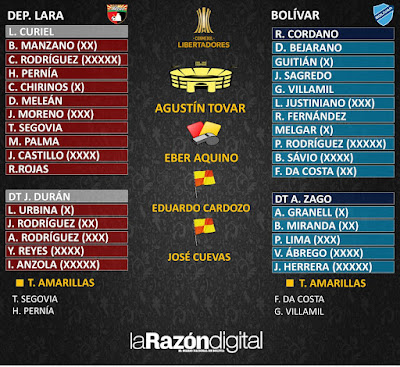
Conmebol Libertadores, First Phase: Deportivo Lara 2 - 3 Bolivar

 Bolívar starred this Wednesday in his first victory in the 63rd edition of the Copa Libertadores de América, beating the Venezuelan Deportivo Lara (2-3) as a visitor and beyond the transcendent for maintaining an unbeaten record of almost 28 years on Venezuelan soil, he added three invaluable points, which now leave him well placed for the rematch in La Paz and seek the ticket to the second phase.

The national team was down on the scoreboard twice, reacted at the right time and came from behind to win in a match that at times went back and forth with five goals.

The start was turbulent for the national credit, he endured a locker room goal before five minutes, equalized and conceded again minutes later. Then his forcefulness in attack and his Brazilian army shone, which gave the stature on the field of Agustín Tovar.

The merit of the Bolivian team was overcoming the adversity of losing and responding with well-strung attacks between their midfielders and their forwards.

Bruno Sávio and Francisco da Costa converted the sky-blue goals, the latter scoring a brace, but both were also a nightmare for the local defense.

The defensive line was the weak point of the Academy that had serious problems when his opponent attacked him with long balls and plays through the air. The absence of defender César Martins was noted in the La Paz squad, lacking order in its last line.

Rodney Chirinos opened the account for the 'rojinegro' two minutes into the first half, the midfielder received the ball at the entrance of the area and took a powerful right-handed shot to the angle, which beat Rubén Cordano.

Bolívar took center stage after the hot flash. He found parity through Bruno Sávio. He headed in a cross from Gabriel Villamil that left goalkeeper Luis Curiel without a chance in the 20th minute.

The joy did not last long, seven minutes later the llanero defender Diego Meleán also responded by way of the area, he rose higher than the sky-blue central defenders and hit a header that defeated the goalkeeper.

From then on, the sky blue dominated the actions at the impulse of his Brazilian duet. At 33 Da Costa cushioned the ball with his chest, settled down and finished off with force, his shot was not well contained by the rival goalkeeper and nested at the bottom of the net.

Da Costa himself closed figures in minute 39. Rodríguez, Sávio and the center forward joined forces and found space and executed a low shot, unattainable for Curiel.

In the complement the pace of the game slowed down, the Bolivian handed over the initiative to his antagonist and went on a counterattack. Lara had chances to equalize but missed on the final stitch. The Academy was saved in the final stretch and wasted a couple of offensives that were well conjured up by Curiel.

The rematch is next Wednesday (18:15) in La Paz, Bolívar is enough with a tie to register his name in the next phase where the Ecuadorian Universidad Católica awaits.

DATA

The Academy remains undefeated in four games without losing on Venezuelan soil for the Copa Libertadores, winning two and drawing two away

The sky-blue from La Paz played his 242nd match in the Libertadores, won 95 matches, equaled 53 and lost 94 times.

The light blue midfielder Leonel Justiniano played his 25th match in the Libertadores. He disputed seven times defending Wilstermann's currency and 18 with Bolívar's.

THE FIGURE: DA COSTA

The Brazilian striker contributed two goals to his team but he was also a persevering and participative striker, a nightmare for the rival defense.

THE REFEREE: GOOD

Paraguayan Eber Aquino closely followed the actions and charged according to the regulations. He disallowed a goal for each team due to obvious lead positions.

Estatics Deportivo Lara 2 - 3 Bolivar

Wednesday, February 9, 2022

Bolívar visits Deportivo Lara in the first cup round

 Academia will seek a victory in the plains, where it already won in 1994. It comes on stage in its 242nd match in the Libertadores, a tournament it is attending for the 36th time.

This Wednesday Bolívar debuts in the 63rd edition of the Copa Libertadores against Deportivo Lara from Venezuela for the first leg of phase 1. An unprecedented rival who will try from 6:15 p.m. to give the first blow in the key against a Bolivian team that aims to add units to settle the series as a local next week.

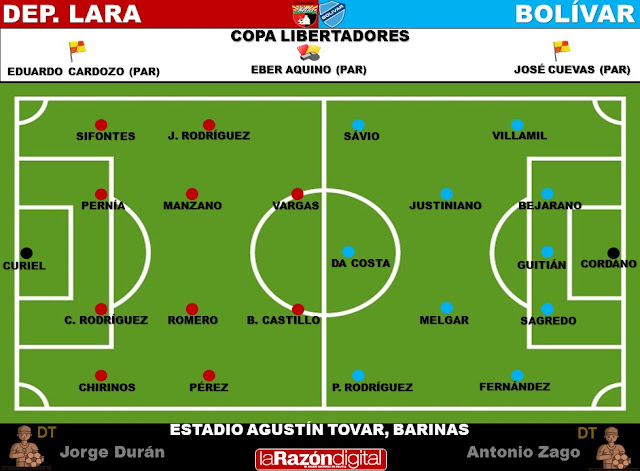
The Academy landed yesterday in Barinas after noon and trained in the afternoon at the Zamora club grounds, the eleventh is practically defined with the only doubt in defense, César Martins or Alberto Guitián as libero in the line of three defenders.

Regarding the team that coach Antonio Carlos Zago tried against Blooming last Sunday (7-0), another variant appears, that of midfielder Carlos Antonio Melgar in midfield instead of the youthful Lucas Chávez.

On offense he will line up his offensive trident made up of Brazilians Bruno Sávio, Francisco da Costa and Argentine Patricio Rodríguez.

The sky-blue comes on stage in his 242nd match in the Libertadores, a tournament he is attending for the 36th time. In the history he achieved 94 wins, 53 draws and 94 losses. As a visitor, he played 121 games with a balance of 15 wins, 27 equal games and 79 losses.

“Deportivo Lara is a good team, otherwise they wouldn't be playing in the Libertadores, we have to respect it but play our game and seek victory. There are no favorites in the Cup, but we are in Bolívar and we always have to go out and win”, pointed out Sávio.

The Academy did well against visiting llaneros teams, in three confrontations they tied two games and won another. They met twice with Minervén in 1994 and 1997, both 1-1, and beat Marítimo 2-0 in 1994.

HISTORY WITH VENEZUELANS

The last precedent against a Venezuelan credit dates back to April 23, 1997 when he equaled one goal per side with Minervén in Puerto Ordaz. Ramiro Castillo (+) scored the sky-blue goal and Alexis Chirinos converted for the local team at the Polideportivo Cachamay stadium.

Deportivo Lara is a club founded in 2009, participating for the fifth time in international competition. His best appearances were when he reached the group stage in 2013, 2018 and 2019. For these events he played 20 games. He won four, matched four and fell 12 times.

The llanero cast has not had official activity since last year, it was reinforced with Aristóteles Romero, Johan Moreno, Henri Pernía and the Panamanian Jhamal Rodríguez. He will not officiate as a local in his own redoubt as he is not in conditions, he chose Barinas for this occasion.

The duel between 'rojinegros' and 'academicians' is scheduled for 6:15 p.m. at the Agustín Tovar stadium, better known as La Carolina. On that court, the Bolivian team fell on February 28 to its pair from Venezuela for Qualifiers.

Bolivar vs Deportivo Lara


Tuesday, February 8, 2022

Bolívar jumps on the scene at the start of the Copa Libertadores

 The 2022 Copa Libertadores will begin this week with the dispute of its first phase 1 matches, an instance in which the Bolívar club will be the first national team to compete in official Conmebol competitions.

His official debut will be tomorrow (18:15 HB) when he visits Venezuelan Deportivo Lara, at the Agustín Tovar stadium in Barinas.

In the same scenario where Bolivia fell 4-1 to Venezuela, for matchday 15 of the South American qualifiers for the Qatar 2022 World Cup, Celeste will seek to strike the first blow against a rival that little by little took center stage this season.

Bolívar, who in 2019 was left out of phase 1 at the hands of Defensor Sporting from Uruguay (global 5-6), in the 2020 edition had a revenge in phase 2 (to which he entered directly) after eliminating Montevideo Wanderers (global 5-1), but was eliminated in phase 3 against Junior de Barranquilla (2-4).

Seeking to be the second Bolivian team to enter the group zone from the previous phases -The Strongest is the only one that did so in the 2015 and 2017 editions- the Academy led by Antonio Carlos Zago bet big.

With the hiring of the Brazilians Bruno Savio, Francisco da Costa and the Argentine Patricio Rodríguez, in addition to the national Carlos Antonio Melgar, Bolívar wants to hit the table against Deportivo Lara.

The second leg will be on Wednesday, February 16 (18:15 HB) at the Hernando Siles stadium in La Paz.

Torque and Barcelona play today (20:30)

The Uruguayan Montevideo City Torque and the Ecuadorian Barcelona will take their first step today (20:30 HB) seeking access to a group stage of the Copa Libertadores soccer that, for the moment, remains distant for both.

Montevideo's Centenario stadium will witness one of the three crosses that the first round of the continental tournament will have at the club level, which will be closely watched by those who await the winner in the second round: Universitario (PER). Cesar Vallejo (PER) vs. Olimpia (PAR) play tomorrow (20:30 HB).
Bolívar jumps on the scene at the start of the Copa Libertadores

Monday, February 7, 2022

Coach of Lara: I have experience at height, we can give a big surprise

 Four years ago he was at Deportivo Cuenca, which left Wilster in Cochabamba on the way. He anticipates that his cast will have a lot of ball possession in the two games against the Academy.

Deportivo Lara's coach, Jorge Durán, knows Bolívar perfectly, who will be his team's rival this Wednesday, in the match to be played in Barinas, for Phase 1 of the Copa Libertadores.

Four years ago he was part of the coaching staff of Deportivo Cuenca, which he left Wilstermann on the way. Now, as coach of the Venezuelan team, his goal is to eliminate the Academy.

What background does Jorge Durán have as a coach?

It is 25 years that he has been in football uninterruptedly. I started in 1996 as a physical trainer for Mineros de Guyana, then I went to Minervén and also assumed that role in the minor teams of Venezuela. Professor Richard Páez took me to support Vinotinto, in Alianza Lima and Millonarios. Today it's my turn to take over officially at Deportivo Lara and I have the training to take on that responsibility.

Which Deportivo Lara are we going to see against Bolívar?

The idea is to have a lot of ball possession. We have players with good footing to fulfill that characteristic. We will try to meet that requirement of facing a great team like Bolívar.

What do you know about Bolívar, have you done any monitoring?

I watched a lot of games from last semester, where I saw that they make a line of five at the back, other times they play with four at the back, they have wingers with quick starts and I know that they have incorporated new players and that they have height in some positions, such as defense. The nine with which they have been reinforced (Francisco da Costa) also has that characteristic. I like (Erwin) Saavedra, which is unbalanced, but they informed me that they sold it. Bolívar has players with good footing and they handle the ball very well, you have to respect that.

Is Bolívar the favorite for the key they are going to play?

Bolívar is a great team in Bolivia, but in the international context the games have to be played. Football is an apprenticeship and we are aiming to face this key with humility and competitive responsibility.

The president of Lara, Daniel Villasmil, acknowledged Bolívar's story, but clarified that he did not play, what do you think?

I think the same, each team has an important representation in their country and internationally, but history must be faced by building and that is what we are doing.

In these 180-minute games, will keeping a clean sheet in the first leg be key?

Having an undefeated arc is a psychological component of the game, since it gives you confidence and handling of the situations of a match. For us, having the goal at zero will be very safe for the group, especially for the rematch.

Are they forced to look for a good goal difference to come to La Paz?

I'm not talking about the goal difference, but rather having a positive result to know how to handle it at home and away.

Does Bolívar have an advantage for deciding the key at home and at height?

I worked at altitude with Millonarios and Cuenca from Ecuador, and we went to Cochabamba with Wilstermann, which we declassified, that's why I say that this international experience that I have has given me the confidence that if the games are played with attitude, we can give a big surprise.

Many teams and selections have won in La Paz, don't you think that the issue of altitude is psychological?

It is psychological and physiological, because the adaptations do not take place in the time that one requires in football. It is very difficult to adapt players to heights like 3,600 meters, each one has a different physiological adaptation. Theories say that it takes 21 days, I consider it to be 30 and it could be a great advantage for the teams that play in La Paz.

But days ago the players of the Bolivian national team felt the heat of Barinas...

It is true, luckily it was played at six in the afternoon, because at four it is with 34 degrees of temperature. Bolívar is going to play in a city that is not normal for a team that comes from altitude. They are natural conditions that each team and selection try to take advantage of that favors them.

Coach of Lara


untitled