Search in the Blog

Showing posts with label History. Show all posts

Sunday, March 20, 2022

Blooming - THE BRIEF ERA OF LOCAL PROFESSIONALISM

 Santa Cruz soccer became a professional sport in 1965. Blooming won its first and only Santa Cruz title at the professional level three years later, in 1968.

In 1974, they were relegated from the Santa Cruz professional league, but a great campaign in the B division in 1975 brought them back to the first A division, which allowed them to join the league two years later.

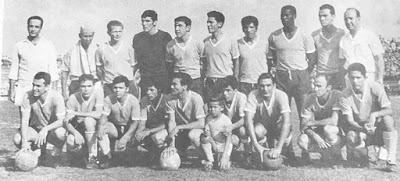
Blooming 1968

1968. El equipo que obtuvo su único título en el profesionalismo cruceño: Higazy, Suárez, R. Larramendia, Frey, I. Larramendia,Rodríguez, Justiniano, Matatheu, Mendoza y Telchi. De cuclillas: Roly Aguilera, Gamarra, Gutiérrez, J. Justiniano, Oliveira, Villa, Arteaga, Benquique y Oyola.

The Classics

When professional soccer was created in Santa Cruz de la Sierra in 1965, Bloming vs. Destroyers was considered the classic of the city of Santa Cruz de la Sierra, due in large part to the popularity and rivalry between the two teams. Founded in 1946 and 1948 respectively, possibly because of their similar age, they captured the attention of the fans. It could also be that this competition was due to the fact that the so-called academics were representative of an elite and the others, called "cuchuquis" of a popular neighborhood: the "Maquina Vieja" and its surroundings. Thus they constituted the classic of the time.

However, the emergence of Oriente Petrolero (founded in 1955) changed the panorama. Oriente, financed in its first period by YPFB, won its first local professional title in 1969 and was the first Santa Cruz team to win a national title (1971). In the professional era, Blooming and Oriente progressively became the most powerful teams in Santa Cruz and became the two great rivals. Since those years, they have been facing each other in the so-called Superclásico, which is considered one of the best classics in the country and one of the best in the world due to its intensity. This classic is ranked 49th in the ranking of the best 50 classics in the world, prepared by the English magazine FourFourTwo.


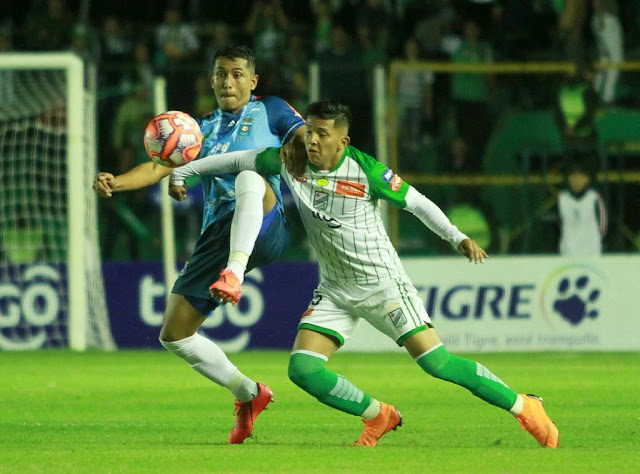
Blooming Oriente Petrolero


Saturday, March 19, 2022

Blooming - One of the first teams from Santa Cruz to play abroad

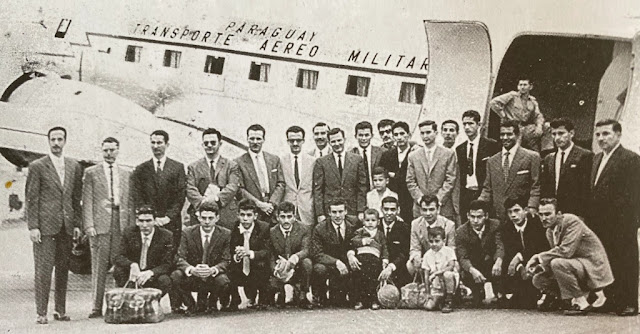
 Precisely in 1963, as the best team of the moment (they would be crowned champions months after that trip), they received an invitation to play an international match abroad against Guaraní of Paraguay. It was one of the first teams from Santa Cruz to play outside the country. It had been preceded by Florida. Despite the adverse result (1-5 in favor of Guaraní), it was a milestone in Santa Cruz soccer, which was on the verge of professionalism.

La delegación de Blooming se apresta a abordar el avión enviado por la presidencia del Paraguay para viajar a Asunción a disputar un encuentro internacional con Guaraní.


Saturday, March 12, 2022

Blooming - THE AMATEUR ERA

 In 1951, Saucedo, Castedo and Viera promoted the formation of a competitive soccer team. Under the presidency of Mario Quintela Vaca Diez, the project was formalized and thus began the laureate history of Los Celestes from Santa Cruz. The president of the Association, Luis Iriarte Peña, was asked to register the entity in the ACF without going through the promotion championships, a request that was also made by Always Ready. The Association's response was that applicants Blooming and Always Ready should play a quadrangular with La Esperanza and Junior. Blooming won the quadrangular that gave them the right to enter the First Division of Honor. Under the technical direction of Melchor Rojas, Blooming began its journey in local tournaments.

Blooming 1954
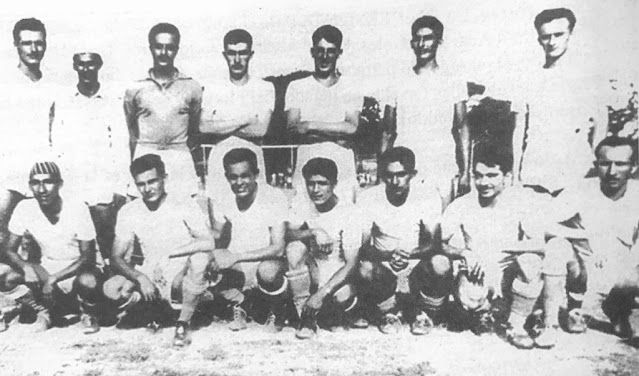
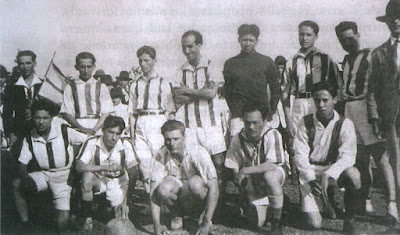
In 1954, Blooming won the first title in its history as the amateur champion of Santa Cruz soccer. This is the team that won that crown: Rojas, Alpire, Higazy, Viera, Ballivián, Cuellar and Aponte. Squatting: Veizaga, Velarde, Chembo Gutiérrez, Añez, Oyola, Mercado and León.

In 1953 it played its first championship along with La Esperanza, Junior, Abaroa, The Strongest, Florida, Alianza and Always Ready. It made its debut on Sunday, July 19, 1953 against The Strongest. For that historic match he presented this lineup: Ortiz, Añez and Aponte, Velarde, Viera and Justiniano, Mercado, León, Egües, Zeballos and Alpire; Bello replaced Egües in the second half. The chronicle tells that the linesman Sanabria was replaced by Chuquimia because he was smoking while performing his duties. La Esperanza was champion that year.

Blooming 1955
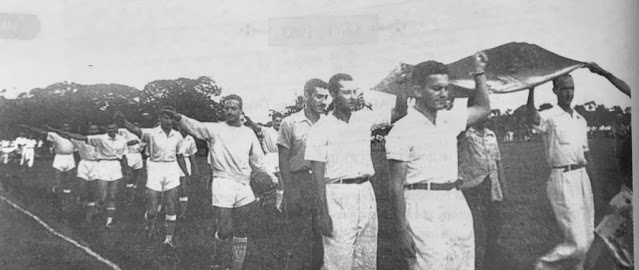
1955. Blooming is two-time champion of Santa Cruz amateurism. In the picture the team parades on the opening day of the tournament that year.

Blooming won its first Santa Cruz title just one year later, in 1954, with a team very similar to the one it had fielded the previous year. They also won the championship twice in 1955. 

Tito Paz, Victor Ugarte y Roly Aguilera
Tito Paz, Víctor Agustín Ugarte and Roly Aguilera, three outstanding figures in history. The most important president of Blooming, one of the three best players Bolivia has ever had and the visionary creator of the Tahuichi Academy. Both Blooming players 

It won its third crown in 1958. In 1960, Blooming reached its fourth crown when on December 31, 1960, it defeated Universidad 4-0, winning the championship with one date in advance. The winners made the Olympic lap in the midst of a tremendous downpour. The last championship in amateurism was achieved in 1963 with a goal by Roly Aguilera against Oriente Petrolero on November 24, with that goal Blooming won the championship.

It should be noted that in the amateur period, the great Blooming president was Mariano "Malaco" Saucedo, who led the institution when the light blue team won four of its five titles.

Thursday, March 10, 2022

Blooming - History Foundation

 In the history of Santa Cruz soccer, the founding of Blooming is a transcendental milestone. It is one of the two great clubs of Santa Cruz and one of the five great clubs of Bolivia.

Official name: Club Blooming.

Founded: May 1, 1946.

Stadium: Tahuichi Aguilera and Municipal Club Blooming.

Address: Banzer Avenue and radial 27, between 7th and 8th ring of the zone of El Remanso and Sausalito.

Nickname: Academia.

Achievements: 5 national championships, 1 cruceño championship, 5 cruceño amateur championships and 3 summer/winter cups.

International career: 7 participations in the Copa Libertadores, 5 in the Copa Sudamericana and 1 in the Copa Merconorte. 

Fundadores de Blooming
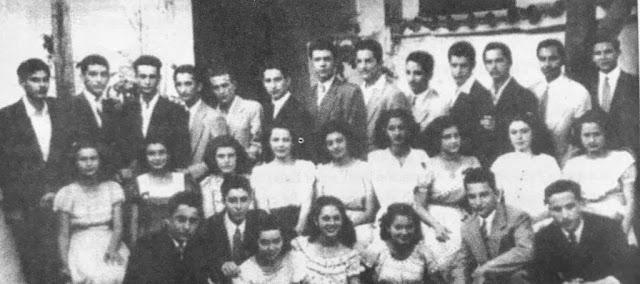
The founders of Blooming in 1946: Standing: Humberto Vaca Pereira (was president of the club), Rodolfo Castedo (was president), Luis Moreno, Mario Quintela (was president), Fito Gutiérrez, Humberto Olmos (was president), Mario Palma, Humberto Ribera, Natalio Roca, Tito Flores, Emilio Ribera, Roque Candia and Juan Carlos Velarde (was president). Seated: Nancy Saucedo, Eddy Salvatiertra, Chita Landívar, Ana María Reyes Ortiz, Beiby Landívar, Ana María Quintela, Sonia Velñarde, Betty Olmos and Tity Gutiérrez, Squatting: Ricardo Pereira, Rolando Olmos, María L. Soria Galvarro, Miriam Palma, Silvia Chávez, Yiyo Casal and Rolando Roca.

THE BIRTH

Soccer in Santa Cruz, whose activity recorded by its historians began in 1909, was institutionalized in 1917 with the founding of the Santa Cruz Football Association (later Asociación Cruceña de Fútbol-ACF), with teams of the stature and popularity of Franco and especially Florida (10 times amateur champion), which dominated eastern soccer until the mid-1940s.

It is in this context that on May 1, 1946, a group of young schoolmates from Florida (part of the Los Chabacanos troupe that they would create in 1949), who had formed the Blue Sky club, decided to found a social, sports and cultural club (a characteristic denomination of those years in the creation of all the important clubs in the country that were born before 1950) that they baptized with the name of Blooming with the light blue color as their motto, which referred to the first stanza of the Santa Cruz anthem: "Under the purest sky of America..." 

The foundation took place in the Círculo de Amigos de la calle Independencia and its protagonists were: Humberto Vaca Pereyra, Humberto Olmos (who was its first president), Mario Quintela Vaca Diez, Rodolfo Castedo, Juan Carlos Velarde, Alberto Lozada Cuellar, Ángel Flores Aguilera and Roque Candia, who lived near the San Francisco church in downtown Santa Cruz.

The most widely accepted version of the origin of the name is that the illustrious historian Hernando Sanabria, consulted on the matter and with a couple of proposals from young people like Skyblue and Bloomfield, came up with the right word: Blooming, which has a very suggestive meaning: to be reborn or to bloom, to be flourishing. It was a time when Santa Cruz was a small city with modest growth. Years later, in fact, it would blossom with full force to become the thriving leading city in the country. The color chosen for the jersey could not be other than light blue with white piping on the collar, sleeve edges and pocket. The shorts were white and the socks were lead-colored.

The club's crest has maintained its shape and color since its creation. It is composed of the light blue that represents the club. The ducal crown and the cross in the center symbolize the Santa Cruz identity and its foundation in the heart of the city. The soccer ball that represents its main activity. In 2009, five stars were added, for the five national titles obtained by the institution. This is the first verse of the sky-blue club's anthem:

It is the academy that comes to win

with great skill and with great humility

it is the sky-blue one, sir... Blooming!

pride of the oriental.

It is remarkable the fact that this sports initiative was based on the own effort without receiving help from private companies or the State.


Wednesday, March 9, 2022

Wilstermann - History 1967 - 2019

 In 1967 a new star was added, most of the above mentioned players were the protagonists, together with other outstanding players such as Osvaldo Villarroel and a youthful Limbert Cabrera Rivero.

The sixth and seventh stars were achieved consecutively between 1972-1973, Limbert Cabrera, Milton Teodoro Joana, Hugo Pérez, Víctor Hugo Bravo, Lindberg Cabrera Buccet, Juan Carlos Sánchez, some of the most remembered protagonists.

The eighth and ninth stars also came in the form of two championships, which occurred between 1980-1981, the so-called "third golden cycle" with Jair, Gastón Taborga, Víctor Eduardo Villalón, Freddy Salguero as its most emblematic players.

It took 19 years to achieve the elusive tenth star, which in 1985 and 1994 escaped from our hands. Mauricio Soria, Marcelo Carballo, Gonzalo Galindo, Carlos Cárdenas, Pedro Guiberguis, the greatest exponents.

The eleventh arrived in 2006, others were the protagonists Marcelo Carballo, Hugo Suarez, Daniel Juarez, among others the protagonists.

Four years later, the lights of the championship and the shadows of the relegation, with Daniel Vaca, Edgar Olivares, Fernando Sanjurjo, Jair Torrico, Marcos Barrera who were the ones who made us smile and cry.

The thirteenth star came in the recent past, 2016, Edward Zenteno, Marcelo Bergese, Thomaz Santos, Omar Morales, among others lifted the trophy.

In 2017 we made history in the Copa Libertadores de América, we qualified to the quarterfinals against all odds, in the group stage we fell in one of the most complicated groups, Palmeiras, Peñarol and Atlético Tucumán. We qualified as runners-up and in the round of 16 we had to dance with the ugliest, Atlético Mineiro, the best qualified of the group stage. In Cochabamba we beat them 1-0 and in Brazil we managed a draw that allowed us to reach the Quarterfinals. There we faced the giant River Plate, in Cochabamba we beat them 3-0, unfortunately in Argentina we could not keep the advantage and we were eliminated.

The penultimate star came in the opening 2018 with Pochi Chávez, Serginho, Fernando Saucedo, Edward Zenteno, Gilbert Álvarez as the main protagonists, playing a playoff match in Sucre against The Strongest, beating them 3-2 in a penalty shootout.

We achieved our fifteenth title in the 2019 Clausura Tournament with an absolute record. We totaled 60 points, something never seen before in the history of Bolivian soccer. Led by Crisitan Díaz, and with Pochi, Pipo, Serginho, Saucedo and Zenteno as leaders, we lifted another cup.

Escudo Wilstermann 1955

Wilstermann Campeon 1967


Sunday, March 6, 2022

Wilstermann - History 1949

 THE CLUB

Our history dates back to the founding of the "Club Tennis LAB" (sic) at 18:25, on November 24, 1949, with the following directors:

- President Carlos Vargas C.

- Honorary President Alberto Estenssoro Alborta

- Honorary Vice President Edgar Pol P.

- Honorary Vice President Luis Zegarra

- Relations Secretary Oscar Gantier H

The second name of the institution was "Club Deportivo y Cultural LAB", so that in late January 1953, finally the Club Cultural y Deportivo Jorge Wilstermann was formed, under the impulse of the Manager of the institution Captain Walter Lehm, this is endorsed with the publication of date, February 6, 1953, in the newspaper Los Tiempos, who reported the following: "Employees and Workers of the Lloyd Aéreo Boliviano have organized the whose first management staff is as follows: Honorary President Commander Walter Lehm, Active President Jose Rico, Vice President Luis Mayorga, General Secretary Carlos Montan, Recording Secretary Sergio Perez, Treasurer Jaime Salazar, Sports Director Natalio Richter, Soccer Director, Enrique Ovando, Director of Basketball Alfonso Peñaloza, Director of Pelota de Mano Gualberto Orellana, Director of Tennis Roberto Cossío, Director of Swimming Jaime Barrero, Director of Boxing Walter Oporto, Director of Chess Rogelio Zubieta, Director of Table Tennis Percy Mac Lean.

Under the leadership of Roberto Prada Estrada, in 1955 the team became professional and between 1957-1960 it won the first and only tetra championship in the history of Bolivian professional soccer, under the impulse of an extraordinary group of players from Cochabamba, among them several who later became the basis of the South American Bolivian Soccer Championship, such as Renan López, Máximo Alcocer, Ausberto García, Mario Zabalaga, Cesar Sánchez, among others.

Primer escudo profesional

El primer escudo de nuestro equipo aviador, que distinguió al Club de 1949 a 1951 tiene una clara identificación con la línea bandera de la aviación nacional, el Lloyd Aéreo Boliviano, y el equipo pertenecía a la división de fútbol y deportes del Club Deportivo LAB.


Primer Equipo de Wilstermann


Saturday, March 5, 2022

Oriente Petrolero - History Part 2

 It obtained its greatest international achievement in 1988

In 1972 Oriente made its debut in the Copa Libertadores de América. Their first international match was against América de Quito, in Santa Cruz on March 12, 1972, at the then Willy Bendeck stadium. They won 4-2 with three goals by Luisinho and one by Dedé. From then on, Oriente participated in the 1973, 1977, 1978, 1980, 1980, 1985, 1985, 1987, 1988, 1990, 1991, 1991, 1997, 1998, 2001, 2002 and 2003 versions and in the preliminary versions of 2005 and 2006.

There is no doubt that its greatest glory came in 1988 when it faced Bolívar, Olimpia and Cerro Porteño of Paraguay, reached the second phase in an impeccable manner, eliminated Colo Colo of Chile and reached the third phase (a merit shared only with Bolívar in the case of Bolivian teams), facing América of Colombia, with whom it tied in Santa Cruz to one goal and lost by 2 to 0 in Cali. In that team there were players of the talent of Víctor Hugo Antelo, Alves, Amodeo, or Da Silva.

But Oriente did not stop there. In 2000 they represented Bolivia in the now defunct Merconorte Cup and in 2002 and 2010 in the Copa Sudamericana.

In a nutshell

The name, the jersey and a curiosity. I always thought that Oriente should change its name. Stop being called Oriente Petrolero and just keep the name Oriente. First, because it has nothing to do with YPFB. Second, because any self-respecting Oriente fan just calls it that: Oriente, the fan is orientista, not orientepetrolerista, and because the word, for obvious reasons, has a great symbolic meaning. The curiosity: Why, being a team of tradition like River, Boca, Peñarol, Nacional, Olimpia, Cerro, Flamengo, Fluminense, Colo Colo, U de Chile, Alianza or Universitario, to give a few examples, does not maintain a single jersey? In any case, it would be a great challenge for some club historian to make a tally of all the different jerseys that Oriente has worn throughout its history. It must be a world record that is not without its appeal and anecdotal side. In any case, it is time that our teams, when remembering their glories, do not refer only to the Liga, because for some, like Oriente, the Liga is too small for the size of their past.

A player. If I may make a value judgment, I believe that Erwin "Chichi" Romero has been the greatest crack of Bolivian and Santa Cruz soccer, hand in hand with Diablo Etcheverry, it is true, but personally I prefer Romero over Marco Antonio and Víctor Agustín Ugarte. Romero would be for me the emblematic figure of the Oriente team, despite his time with several national teams and Quilmes of Argentina.

Facts and figures

Since the creation of the Aerosur Cup, Oriente has won the 2003 and 2005 titles. In addition to second place in 2007

19 titles in the showcases

Thus, Oriente has 19 titles, 4 in the Santa Cruz amateurism, 7 in the Santa Cruz professionalism, 1 national title in the Simón Bolívar Cup, 5 national titles in the League and 2 in the Aerosur Cup. It ranks fourth in number of titles won after Bolívar (34), The Strongest (29) and Wilstermann (23), but with the difference that Strongest was founded in 1908, Bolívar in 1925 and Wilstermann in 1949. The La Paz teams in particular have either twice or almost twice as many years of existence as Oriente, which, especially in the case of Strongest, enabled them to win numerous amateur titles in La Paz in the first half of the 20th century.

With fifteen participations in the Libertadores, plus two in the preliminary phase, one in the Merconorte and two in the Sudamericana, it is, after Bolivar, the Bolivian team with the most international appearances in our history.

Oriente Petrolero History Chichi Romero

Thursday, February 24, 2022

Oriente Petrolero - History

 Amateurism was born in Santa Cruz in 1917, a long ninety-three years ago and its first champion was Franco, being the runner-up the team called Mundial. Oriente Petrolero was born as a club -in the context of the Bolivian oil boom and the importance of Santa Cruz for YPFB's production- together with other "petroleros" such as Chaco Petrolero in La Paz, Petrolero in Cochabamba and Oeste Petrolero in Sucre. Its birth certificate dates back to November 5, 1955 by the hand of its first president Mr. Elmer Saucedo, fifty-five years ago. There is no doubt that of the saga of the 'petrolero' teams in Bolivia, Oriente is by far the most successful.

Once promoted to the first division of Santa Cruz soccer in 1957, it began its brilliant career.

A digression is in order here. It is often mentioned that everything prior to the Liga was amateurism, but this is not the case. Bolivian professional soccer (i.e. a spectacle with clubs that pay salaries to their players) was born on May 25, 1950. First in La Paz. In 1954 Oruro and Cochabamba entered professionalism. In 1965 Santa Cruz did so, followed by Sucre, Potosí, Tarija and Beni. The only department without professional soccer is Pando.

Just four years after its creation, Oriente was the Santa Cruz amateur champion in 1959 and also won the title in 1961, 1962 and 1964. Four times champion of Santa Cruz and once runner-up (1960).

Then came professionalism in local soccer. Santa Cruz played its first professional tournament in 1965, that year Destroyers was consecrated as the first Santa Cruz professional champion, but without any doubt Oriente became the most winning team in the Santa Cruz championship until the creation of the League. It was champion in 1967, 1969, 1970, 1971, 1971, 1972, 1973 and 1976. It is the only five-time champion of that stage of local professionalism. Seven Santa Cruz titles and as if that were not enough, it was runner-up three times in 1965, 1966 and 1975. As a result, Oriente did not win any awards in only two championships, 1968 and 1974.

After that, the albiverdes continued to win prizes in the Simón Bolívar National Championship. While professionalism had been limited to La Paz, Cochabamba and Oruro in the 1950-1959 period, the Simón Bolívar National Championship was created in 1960, bringing together teams from seven of the nine departments. In that national professional tournament, Oriente was the first team from Santa Cruz to win a national title, perhaps the most endearing in its history, that of 1971, which inaugurated its fundamental role as one of the great Bolivian teams of all time. That title, which ironically it disputed until the end against another oil team, Chaco de La Paz (which was runner-up), was won with outstanding figures such as Miguel Antelo himself, its current and successful president, Ladislao Jiménez, Jorge Campos, Rolando Justiniano, René Domingo Taritolay, Dedé and Toninho, among others. Of the Bolivian players who were part of the team, many were stars of our national team in the seventies. But at that time they also won two national sub-championships, in 1972 and 1976.

Once in the League, Oriente was the protagonist of 15 tournaments. Here we enter the 'official history'. Oriente was champion in 1979, 1990, 2001 and twice in 2010. If '71 was the sweetest moment, '77 was probably the most bitter. It was the first year of the League and in a final in Cochabamba they lost the first league title to The Strongest by 3 to 1, it was the Tigre of Jorge Carlos Lattini and Ovidio Mezza....

But what few remember is that the Albiverdes have achieved no less than twelve runner-up finishes, the aforementioned 1977 and those of 1984, 1986, 1987, 1987, 1989, 1996, 1997, 2000, 2002, 2004, 2007 Apertura and 2010 Apertura.

Curiously, because of those incomprehensible things that the League has, the refinery team has a title that nobody knows if it is official or not for this computation, the so-called Winter Championship of 2010, which would be good to know what formal category the League gives it in the history of its championships. In my opinion it should be computed among its official titles.

This adds up to five league titles (one that is in "limbo") and twelve subtitles.

(one that is in "limbo") and twelve subtitles

Wednesday, February 23, 2022

Cañada Strongest - Great Bolivian victory in the Chaco War

 A large number of players, members and directors of The Strongest club fought during the war with Paraguay between 1932 and 1935. By 1933, 600 members of this very paceñísima institution were on the battle front. At the outbreak of the Chaco War, in July 1932, the championship of La Paz Football Association was at the end of its 1st. The Strongest was one point behind in 2nd place, so the Central Council of the association decided to suspend the championship and award the year's title to Bolívar and the sub-championship to The Strongest, which, like the other institutions, joined the national effort, sending players, members and directors to the battle front. By 1933, The Strongest club had more than 1,500 members, including ladies, gentlemen, youth and children.

Of these, 600 left for the sands of Chaco, joining the First Army Corps. They did so not in auxiliary services, but in the front line. Later they would continue to join in similar numbers until the cessation of hostilities. The publication Semana Gráfica, in issue number 24 (April 8, 1933), made a tribute to The Strongest on the occasion of its Silver Jubilee, highlighting how the club contributed to the war campaign with the human support of directors, players, fans, and partners.

In the Secretariat of The Strongest club located in Cólon and Comercio streets, living the moment with singular patriotism, it was inaugurated, 'La correspondencia del soldado', to collaborate with prisoners of war and relatives of officers and soldiers. - 89- -It was headed by Don Benito Sagárnaga, a singular man and outstanding stronguista.

In that sense, according to his records, it can be pointed out that up to July 1933, between letters and cards, more than 450 requests had been dispatched. These, as can be understood, came from people unable to do so personally, and wishing to inquire about the health or whereabouts of their sons, brothers or husbands who were in the line of fire. Benito pointed out that they did it absolutely free of charge, providing, in addition, paper and obituaries that bore our emblem, splitting up certificates and requests to the General Staff, etc.

In an interview for La Semana Gráfica, made by the correspondent Chasqui, Benito Sagárnaga said very enthusiastically: "Thousands of letters have been sent to date and our radius of action does not only include the Chaco; we also maintain our correspondence to the prisoners held by Paraguay. These letters, like all of them, bear our seal. You can see the satisfaction that this emblem must give to the stronguista in foreign lands". The purpose of the soldier's correspondence was also to help the wounded and sick.

To this work was added the fundraising that was done among the affiliates, organizing several kermes and social activities to collect funds, which were later destined to help the Bolivian combatants.

Among the outstanding atigrados players, members and directors who marched to the conflict were Captain Víctor Hugo Estrada Cárdenas and Lieutenant José Rosendo Bullaín, who was flag bearer and senior brigadier of the Military College, whose soccer career is similar to Estrada's. Meanwhile, Colonel Luis Emilio Aguirre was the first fallen in Boquerón. Lieutenant Lucio Vila was also another stronguista fallen in the battlefields. Lieutenant Colonel José Ayoroa, considered one of the best military men the Army ever had, stood out. They were joined by Carlos Constantino Noya and second lieutenant Carlos Zalles Guerra, a member of The Strongest who fell in combat. The same fate befell Adrián Murguía Vargas and Pedro Escalante, distinguished stronguistas.

Among the names that also stand out is that of Emilio Estrada, captain of the first division soccer team. Also not to be forgotten are Second Lieutenant Severo Medrano, Lieutenant Luis Peña, Luis Daza Aparicio, Hugo Gamarra, Alfredo Pascoe, Lisímaco Gutiérrez, Julio Zuazo Quintanilla, Adolfo Díaz Romero, Gerardo Peláez, José Toro, Hugo Alípaz, Nils Galdo, Luis Cornejo and Renato Sainz. Also mentioned are the surnames Llanos, Morales, Medina, Muñoz, Montoya, Alarcón and Alborta Rada. After the cessation of hostilities, the citizens of La Paz gradually returned to their daily activities.

The Government of the time rewarded The Strongest Club with the land located between Illimani Avenue and Yungas Street in the Santa Barbará neighborhood, where the old La Paz Bullring used to stand. This Sports Complex, the first of its kind in the country, was named after its mentor Don Gustavo Carlos Otero, where the Antonio Asbun Soccer School of our children's divisions is currently located.

In 1935, the Football Association of La Paz (AFLP) quickly organized the tournament of the year, and the club The Strongest, with a new team, won the first post-war soccer crown, among nine participants. After several decades, the club later incorporated notable players of Paraguayan origin into its ranks, some of whom even adopted Bolivian nationality and played for the national team, such as Luis Galarza, Wilfrido Cañellas, Eligio Martínez, Julián Jiménez, Miguel Gariazú and Pablo Escobar.

The Strongest is not just another sports club, but above all, a school of civility, altruism and patriotism where many generations of young people have been molded physically, spiritually and morally.
The Strongest en la Guerra del Chaco

The Strongest en la Guerra del Chaco


Tuesday, February 22, 2022

Club The Strongest - Viloco Tragedy

 It was 1969, the Board of Directors presided by Don José Luis de Aranguren, had made as in many other occasions a real effort to form a team of soccer players to the stature of the Club's history; this is how this objective was achieved; the same that was in competition in the local competition.

The Strongest received an invitation from the Asociación Cruceña de Futbol who organized an international quadrangular championship in homage to the anniversary of the Department of Santa Cruz. The Strongest left for Santa Cruz with its entire starting line-up, with the exception of captain Rolando Vargas and Paraguayan Luis Gini, who was injured, as well as Marco Antonio Velasco from Santa Cruz, who was also seriously injured twenty days before the trip.

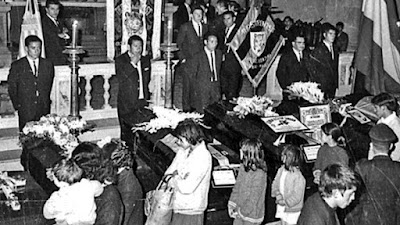
Alberto Alarcón; as Manager and Delegate, Mr. José Ayllon, the Technical Director, Professor Eustaquio Ortuño, and the players: goalkeepers: Armando Angelacio, and Orlando Cáceres; defenders: Hernán Andretta, Juan Iriondo, Miguel Angel Porta, Jorge Tapia, Julio Alberto Díaz and Oscar Guzmán; midfield: Héctor Marchetti, Oscar Flores, and Raúl Farfán; attackers: Diógenes Torrico, Fernando Duran, Osvaldo Franco, Eduardo Agustín Arrigó, Germán Alcázar, and Ernesto Villegas; utility player: Felipe Aguilar. Once the participation in this tournament was completed, The Strongest started its return from Santa Cruz, on Friday 26th, at 2:10 p.m. it boarded the Douglas DC-6B ship of the LAB. - 92 -At 3:30 p.m., the operators of the Trompillo airport notified the Cochabamba and La Paz airports of the loss of contact with the aircraft, which led to the presumption of a serious emergency and later became a real national tragedy with the loss of 74 lives, including well-known national personalities and the entire delegation of The Strongest, except General Alberto Alarcón who for personal reasons had decided to stay in Santa Cruz.

The grief and pain took hold not only of the Strongest family, but of the people and the country in general, since the news of the crash of the ship in the summits of Viloco, in the Andes Mountains, sowed mourning throughout the national territory.

After the pain of friends and strangers, and after the tributes to our "Martyrs of Viloco", as they have been declared, came the process and the arduous task of raising a new team from the ashes of this tragedy; For this purpose, national and international solidarity was received, from various parts of South America came samples of solidarity from various clubs, offering their teams to act for free for the benefit of the club The Strongest, as well as the Argentine clubs Boca Juniors and River Plate, which were made available to the "atigrados" and whose presidents came in person to the city of La Paz.

Other encouraging signs of solidarity came from the Bolivian Football Federation, the South American Confederation and FIFA, as well as clubs from the continent. From that moment on, the task of reviving and rebuilding The Strongest was the work of many people and institutions. A high-level commission was formed to make possible the offers of collaboration from Buenos Aires, Santiago, Lima, Rio de Janeiro, Asuncion, etc.

Boca Juniors contributed with two excellent youth players Romerito and Bastida. The president of the South American Football Confederation, Teofilo Salinas, donated twenty thousand US dollars; The President of the Brazilian Sports Confederation, Joao Havelange, organized the Carioca classic: Flamengo vs Fluminense, whose proceeds benefited The Strongest, even the classic rival Bolivar gave its most important players and thus formed the team called "The Strongest Symbol" which would tour the interior of the country and also abroad in order to raise funds for the recovery of the Aurinegra.

Thus, like the Phoenix Bird, The Strongest rises from the ashes of adversity, but always honoring its "Martyrs of Viloco" and all those who showed us the way and who are no longer with us today, to reach the hundred and two luminous years and stronger than ever.
Viloco Tragedy

Viloco Tragedy


Monday, February 21, 2022

Club The Strongest - History

 Since the appearance in 1899 of the first soccer club in La Paz, "La Paz Football Club", which two years later became the "Bolivian Rangers FC" and its great rival of the time "The Thunders FC" (1902), a large number of clubs burst into the soccer firmament of the city, Clubs of different types appeared and disappeared with great ease, their life was so ephemeral that very few made it to the second decade of soccer in La Paz and even less to the third, which is why a group of boys, were determined to found a really strong club, "the strongest" of the time and that was imperishable in time.

They held their meetings in a nice kiosk located in the Plaza Murillo, some of the young men already had experience in founding and organizing clubs, as they had founded a few years before the Victory Club, the Club 20 de Octubre and the Dread Club.

On the afternoon of April 8, 1908, they decided to found the dreamed club and that same night, in the house of Alberto Requena Crespo, located on the corner of Buenaventura Bueno and Juan de la Riva streets, the pleasing name of Strong Football Club was born: Strong Football Club.

A few days later, at the home of Francisco Kochiche Guachalla's CLUB THE STRONGEST - 82 - the boys reconsidered the name and agreed that Strong was not strong enough... we said! - "the strongest". There came the voice of Victor Manuel Franco who studied English to add the article "The" and Ramon "Pachacha" Gonzales to add to Strong the superlative "est" and then the name sounded strong and beautiful: "The Strongest Football Club" which in Spanish means "the strongest soccer club".

The founders were: José López Villamil, Alberto Requena, Víctor Franco, Francisco Guachalla, Juancho González, Alberto Tavel, Adrián Deheza, Felipe González, Armando Elio, Luis Rivera, Isaac González, Luis Felipe Dick, Isaac Alípaz".

In an extensive note made to one of the founders on the occasion of the 50th anniversary of the club, in the morning paper El Diario, Don Hugo Alípaz, pointed out that, Luis Felipe Dick presided over the first meeting for the founding of the club, the honor of the first official presidency falling on José López Villamil.


The first sessions were held in a kiosk in the Plaza Murillo and sometimes on a bench in the Paseo de El Prado. Later the meetings were held in the house of "Khochichi" Guachalla, in the house of "Pachacha" González or in the Montes' residence.

At the beginning only football was practiced, but later the club's scope was expanded to include basketball, tennis, swimming, among others. Alípaz mentioned in the interview that: "our first field (court) was the 'pampita de la Tejería' behind the Church of San Pedro, playing with a ball made with a cow's bladder. When the regulation leather balls appeared, we played on the field on Arce Avenue," which the Ernst brothers had set up on their father's farm....

The first amateur match for the Club was against Nimbles Sport Association, a team founded in 1909, which was undoubtedly our fiercest rival in this early period.

From the moment The Strongest played its final match to become champion of the first Cup tournament played in Bolivia in 1911, organized by the Prefecture of the Department of La Paz, in which it defeated by 3 goals to 1 its great rival of the time, the Nimbles Sport Association, it was constantly linked with victories, logically its rich history is also tinged with falls, - 83 - but undoubtedly the fans have more reasons to celebrate and feel proud to belong to the largest sports institution in the country, through these more than one hundred years of rich sports and social history, written in letters:


"GOLD AND BLACK".

Association football is governed internationally by the International Federation of Association Football (FIFA; French: Fédération Internationale de Football Association), which organizes World Cups for both men and women.


The Strongest 1909


Sunday, February 20, 2022

Club Bolivar - International Achievements

Bolívar currently ranks ninth in the Copa Libertadores historical ranking, behind only Nacional, River Plate, Peñarol, Boca Juniors, Olimpia, Cerro Porteño, América de Cali and Colo-Colo.

Bolívar is the first Bolivian team to make an international tour. In December 1930 and January 1931, Club Bolívar played five matches in Chile, becoming the first Bolivian team to play outside Bolivia.

Bolívar is the best placed Bolivian team in the historical table of the Copa Libertadores de América, appearing in ninth position.

Bolívar is the only Bolivian club to reach an international final.

Bolívar is the only Bolivian team to be semifinalists in the Copa Libertadores de América in its current format (knockout rounds from the round of 16).

It is also the Bolivian team with the most participations in international tournaments, with 28 Libertadores Cups, 6 South American Cups and one Conmebol Cup.

Bolivar had a good international representation as it is currently ranked 8th (out of 196 clubs) in the Copa Libertadores ranking since its creation in 1960 until the end of the Copa Libertadores 2013 edition.

Bolivar is the 5th team in the Americas with the most participations in the round of 16 of the Copa Libertadores with a total of 11 participations.

It also ranks 17th (out of 25) in the 12 editions from 2002 to 2013 of the Copa Sudamericana.

In the 1991 Copa Libertadores, Bolívar defeated Argentinean teams Boca Juniors and River Plate at home, with Paraguayan Miguel Ángel Sanabria, who played for the Bolivian club that year, as a star player.

Bolívar is currently ranked 21st in CONMEBOL's Official Club Ranking, followed by big clubs in the Americas such as Colo-Colo, Racing Club, Club Atlético River Plate, Club Atlético San Lorenzo de Almagro and Botafogo de Futebol e Regatas.
International Achievements


America's Libertadores Cup
1986


América de Cali and Olimpia of Paraguay played against them in the semifinal. In La Paz they clearly defeated América by 2 to 0. The match that broke the Celestial options was played in Cali. Bolívar started winning with a great goal by the great left striker of the Peruvian national team, Jorge "Coqui" Hirano, right at the beginning of the second half. The sky-blue team, with gritted teeth, held on to the victory until the 30th minute, when the locals managed to equalize. In the 39th minute, Ricardo Gareca scored the winner for América. The last match in La Paz still gave the Academy a chance, but Olimpia opened the account and Abdeneve tied it at 27 minutes of the second half. Time was not enough. América achieved 5 points, Olimpia 4 and Bolívar 3. In the total table of that tournament, with its 12 points, Bolívar was behind River and América managed to occupy the third place.

South American Cup
2004


In the final, they played against Boca Juniors from Argentina. The Bolivian club played the first leg at the Hernando Siles Stadium, defeating the Argentinean club by the minimum difference, thanks to Horacio Chiorazzo's goal in the 75th minute. In the second leg, played in Buenos Aires at La Bombonera, the Bolivian team led by Bolivian international Vladimir Soria, lost 2-0 due to goals by Martín Palermo and Carlos Tévez, in the 14th and 28th minutes respectively, and thus the Bolivian club, was runner-up in the continental competition.

Bolivar ended 2004 in 32nd place in the world club ranking, ahead of several traditional clubs, such as Bayern Munich (39th), Cruzeiro de Belho Horizonte (44th), América de México (52nd) and Cerro Porteño (68th), among other clubs.
Copa Sudamericana 2004


America's Libertadores Cup
2014


Bolivar reached the semifinals of the Copa Libertadores for the second time in its history, this time in the 2014 edition. During this instance, the Academy defeated León, Emelec and Flamengo in the group stage. They then defeated León again in the round of 16, while in the quarterfinals they beat Lanús from Argentina (after a 1-1 draw in Buenos Aires and a 1-0 win in La Paz). However, in the semifinals they lost to San Lorenzo de Almagro (with a 5-0 defeat in Buenos Aires and a 1-0 win in La Paz) and were eliminated from the competition.

Thursday, February 17, 2022

Bolivar Club History 1978 - 2017

1978 a 1997

The 1978 champion team, the first Bolívar champion of this new era: Carlos Conrado Jiménez, José Queiroz, Carlos del Puerto and Vlado Svigir; Ricardo Troncone, Aldo Fierro, Ramiro Vargas, Jimmy Lima, Héctor Cáceres, Pablo Baldivieso, Luis Gregorio Gallo; Erland Araoz, Stephan Matic, Carlos Aragonés; Viviano Lugo, Raúl Alberto Morales, Waldino Palacios, Jesús Reynaldo, Porfirio "Tamayá" Jiménez" and Carlos Borja (then right forward). In 1979 they won a minor official competition, called Copa Liga.

During the 1980s, it won its first bicampeonato in the 1982 and 1983 tournaments, won the 1985 tournament and also its second bicampeonato, winning the 1987 and 1988 tournaments. In the 1990s, he was again crowned two-time champion in 1991-1992, in 1994, two-time champion again in 1996-1997 and runner-up in 1990 and 1993. It also won the 1997 Apertura and 1997 Clausura short tournaments. 

Bolivar Campeon

The 21st Century
2001 - 2006

In the new millennium, Bolívar won its first title, winning the 2001 Apertura Tournament. The following year, Bolivar improved its campaign and won the First Division championship by winning both short tournaments (Apertura and Clausura). The season also meant the consecration of Joaquín Botero, who managed to finish the year with 49 goals, which earned him the International Federation of Football History and Statistics (IFFHS) award as the world's best scorer in the First Division in 2002.

As of 2003, the annual final was no longer played and the winners of both the Apertura and Clausura tournaments were considered First Division National Champions. As a result, the club won the 2004 Apertura, 2005 Adequación and 2006 Clausura tournaments.
Bolivar 2000


The 21st Century
2008 - 2017


In 2008, a new cycle began at the club, with the BAISA project and the Marcelo Claure, Guido Loayza tandem. The first achievement of this new light blue phase came in the 2009 Apertura Championship.

In 2011 it was crowned champion of the Adecuación de la Liga tournament.

In 2013 the Bolivar club managed to win the Clausura tournament.

In the second half of 2014 Bolivar managed to win the Apertura Tournament, in the following tournament it won again the Clausura Tournament 2015.

The sky-blue team repeated for the sixth time a bicampeonato, winning the Clausura and Apertura Tournament 2017, thus achieving its twenty-second First Division title.

Proyecto BaISA


Wednesday, February 16, 2022

Bolivar Club History 1957 - 1978

1960 a 1976

On October 1, 1960, the Major Tournament was created. Given the successful experience of the previous decade with well-organized championships and national transcendence. The president of the commission in charge of this tournament was the president of the AFLP.

Subsequently, the tournament was renamed "Simón Bolívar Cup", with a regionalized character due to the difficulty to travel at that time, thus playing the final phase in the last 4 months of the year among the winners of their associations and regional tournaments.

From 1960 until 1976 in the national tournament, it won the 1966 and 1968 championships. Lauro Ocampo Crespo was then president of the institution. In 1968 Bolivar won its first title under the presidency of Mario Mercado. In 1976 it won its last title before the liguero era.

Bolívar won the 1966, 1967, 1969 and 1976 titles and the 1960, 1968 and 1974 runner-up finishes in the championship of La Paz.

In 1967 they played their first Copa Libertadores with Club Deportivo 31 de Octubre.

The Cursed Year 1964 - 1965

The black year in the Celeste's history is considered to be 1964.

A bad campaign led to relegation in that championship against a recently promoted team, Universitario de La Paz, which beat Club Bolivar 2-1.

In 1965, a new board of directors was formed, headed by Luis Eduardo Siles Salinas, with the support of Mario Mercado Vaca Guzmán, which led to the birth of the so-called "Operation Return".

Bolívar won the undefeated championship of the second division of La Paz with a team that had much more hierarchy than its rivals. Soon after Bolívar was relegated, it was thought that relegation was the beginning of the institution's debacle, as it was for others.

The Seventies 1974 - 1983


In 1975 Bolivar had one of the highest quality squads in national soccer, having discovered Carlos Aragonés, an exceptional Bolivian midfielder.

The team also had Ovidio Mezza, at that time the best national player, with the talent of the greats, a mixture of creative midfielder and attacker.

There was the goalkeeper of the national team Carlos Conrado Jiménez, Luis Gregorio Gallo, who had worn the Argentinean national team jersey, the young Edgar Góngora, a defender like Pablo Baldivieso and the great gentleman of the area Ricardo Troncone.

The Academy also won the runner-up trophies in La Paz in 1974 and 1975.

Bolívar was in the Copa Libertadores in 1970, 1976, 1977 and 1979. However, they were unable to advance beyond the first round. After their 3-2 defeat in 1970 against Boca Juniors, they began an important period in which they were not defeated playing at home in La Paz until 1983.
Bolivar Campeon 1982

1977 a 1978


The structural crisis of soccer brought to light by the catastrophe of the national team in Cali led to the creation of an entity with the exclusive participation of professional clubs at the national level.

On August 23, 1977, at the then Sheraton Hotel in La Paz, 16 clubs from almost the entire country decided to create the Bolivian Professional Soccer League.

Club Bolivar won its second league championship in 1978.
Bolivar Campeon


Tuesday, February 15, 2022

Bolivar Club History 1935 - 1957

1937 to 1945

The Celestes became champions for the second time in 1937.

Bolívar was runner-up in 1938, champion for four consecutive years between 1939 and 1942, achieving the four-time championship. That team was led by the players Walter Saavedra, Rojas, Romero, Plaza, Gutiérrez and Garzón.10 He was also runner-up in 1943 and 1945.

1947

1947 is an important year for Bolívar and for Bolivian football, as Víctor Agustín Ugarte debuted in the light blue jacket, the Tupiceño who came to La Paz to test himself and from the first day showed his quality. Bolívar made him debut against Ferroviario and that same year he debuted his talent in the Bolivian national team. Ugarte is for those who saw him play, the undisputed best Bolivian player in history. Entering right in the old 2-3-5 scheme, he was progressively falling behind to manage the team

Bolivar 1947

Semi-professional era

1950

As of 1950, the AFLP divides its tournament into First “A” with the clubs already consolidated from amateurism and the amateur division. Later, teams from Cochabamba and Oruro joined the 1st A tournaments, thus giving way to interdepartmental championships.

Bolívar was the first champion of this stage. In the presidency of Armando Gamarra and under the direction of Víctor Agustín Ugarte from Tupic, Mario Mena from Tarija and the participation of players such as the Argentine Ramón Guillermo Santos, they became champions with 21 points.

Among the players who led the club to its first professional glory were, in addition to the three leaders: Conrado Kramer, Walter Vascones, Celestino Sandoval, Guillermo Baldellón, Arturo Miranda, Edgar Vargas, Fernando Sanzetenea, Benjamín Ugáz, Arlindo Puertas and Walter Orozco.

Bolivar 1950

1953 to 1956

With José Fiorilo he won the 1953 title, for the first time a team achieved the professional tournament undefeated with 11 wins and a whopping 40 goals in 14 games.

He repeated the success by winning the 1956 championship. Rodolfo Plaza Montero, who had been a great national player for both Bolívar and the national team, directed the club. He is the only former player of the institution who was also president.

His unforgettable international friendly match was played on January 14, 1956 in La Paz when he defeated Club Atlético River Plate of Buenos Aires by a historic 7-2 win. Carrizo, Rossi, Bayro, Vernazza, Sívori, Méndez, Ángel Labruna and Zárate played in the millionaire box. Bolivar gave himself a banquet. It was a game that has become a legend and the fans do not forget the historic win.

Bolivar 1956

1957

Given the fact that the South American Football Confederation (CONMEBOL) had organized the South American Championship of Champion Clubs (later called Libertadores de América) at the beginning of the year, the Bolivian Football Federation decided to create a championship under its tutelage, taking control of the interdepartmental tournaments that had been under the administration of the AFLP.

Bolivar 1957

Monday, February 14, 2022

Bolivar Club History 1925 - 1935

 Bolivar Club Foundation

On April 12, 1925, on Junín Street in the city of La Paz, a group of young people gave way to the creation of a sports club, called "Club Atlético Bolívar" in honor of the great Liberator Simón Bolívar.

Over the years, the name of Club Atlético Bolívar was reduced to just Club Bolívar, an institution that would ultimately become the most successful and important football club in Bolivia.

The first directive was formed as follows: President Armando Gamarra; Vice President Guillermo Ortiz; accompanied by: Carlos Terán, Humberto Bonifaz, Luis Ernesto Sanz, Héctor Salcedo, Rafael Navarro and Felipe Gutiérrez.

First Directive Bolivar Club

Amateur Era 1927

In 1927, two years after its founding, Club Bolívar joined the La Paz Fútbol Association. Bolívar participated in an official championship for the first time, which was played on the Miraflores field, where it was runner-up.

The first team that disputed the 1927 championship in which, being a debutant, achieved the runner-up behind Nimbles Sport, was made up of a stable team that was made up of Walter Miranda, Enrique Tellería, Felipe Gutiérrez Nieto, Víctor Leclere, Carlos Terán, Germán Garnica , Roberto Segaline, Miguel Carreón, Luis Ernesto Sanz, being their captain Humberto Barreda. Alfredo Molina, Roberto Gómez and Carlos Álvarez were incorporated a year later.

Bolivar

1927 to 1929

His first international friendly match was played on June 3, 1927 when he faced Coquimbo Unido de Chile in La Paz, he was defeated 2-1.

In 1928 the sky-blue ones occupy the fifth place in the table of placements.

In the official tournament of the year 1929, the Bolívar club gets third place.

1930 to 1931

On May 11, 1930, the official championship began, and ended on July 30 at the main stadium, Estadio Hernando Siles, with the Bolívar club achieving the sub-championship with seven units.

In 1931 the tournament was met with poor performances by teams that did not have good lower divisions, limiting the championship to only four teams. 

Bolivar 1930

1932 to 1935

It was in 1932 when the Bolívar club achieved the championship played in two series for the first time in its history. The contest began on May 26, having to be suspended due to the events of the Chaco War on September 25. "La Paz Fútbol Asociation", established that the location and score of the moment was recognized in the final table. Due to this circumstance, Club Bolívar was declared Champion of that year.

In the years 1933 and 1934, the tournaments were suspended due to the war in Chaco

After the war, the championship was restarted only in 1935.  

Bolivar

Continue in: 


untitled